the composition station
in my last post, i described fse set up as a musical instrument, playable by a single or multiple performers, with or without a dedicated engineer in the control room. now i’d like to talk about the composition station.
why a composition station, you may ask. didn't you just wax poetic about recording all parts with utter spontaneity? well, yes. but i find myself in need of another dimension, a way to efficiently structure large scale works, include the full universe of the instruments i play, and make works repeatable independently of the performer.
and so it is that we resort to a combination of cutting-edge technology and centuries-old tradition: the mock-up, accompanied (after considerable editing) by a notated score and parts. this score can then be interpreted by skilled professionals, and performed in the hall for a live audience. the performance and/or recording session can be captured as a recording from the control room, and mixed to perfection.
so what exactly is this compositional process? well, initially-- forty-five years ago-- i sat down at a piano with paper and pencil. this was cumbersome! one had to notate one's riffs and structures. copy and paste meant just that: scissors and glue. one had a more or less vague idea how the score would actually sound. in the late eighties, scoring became viable thanks to the daw.
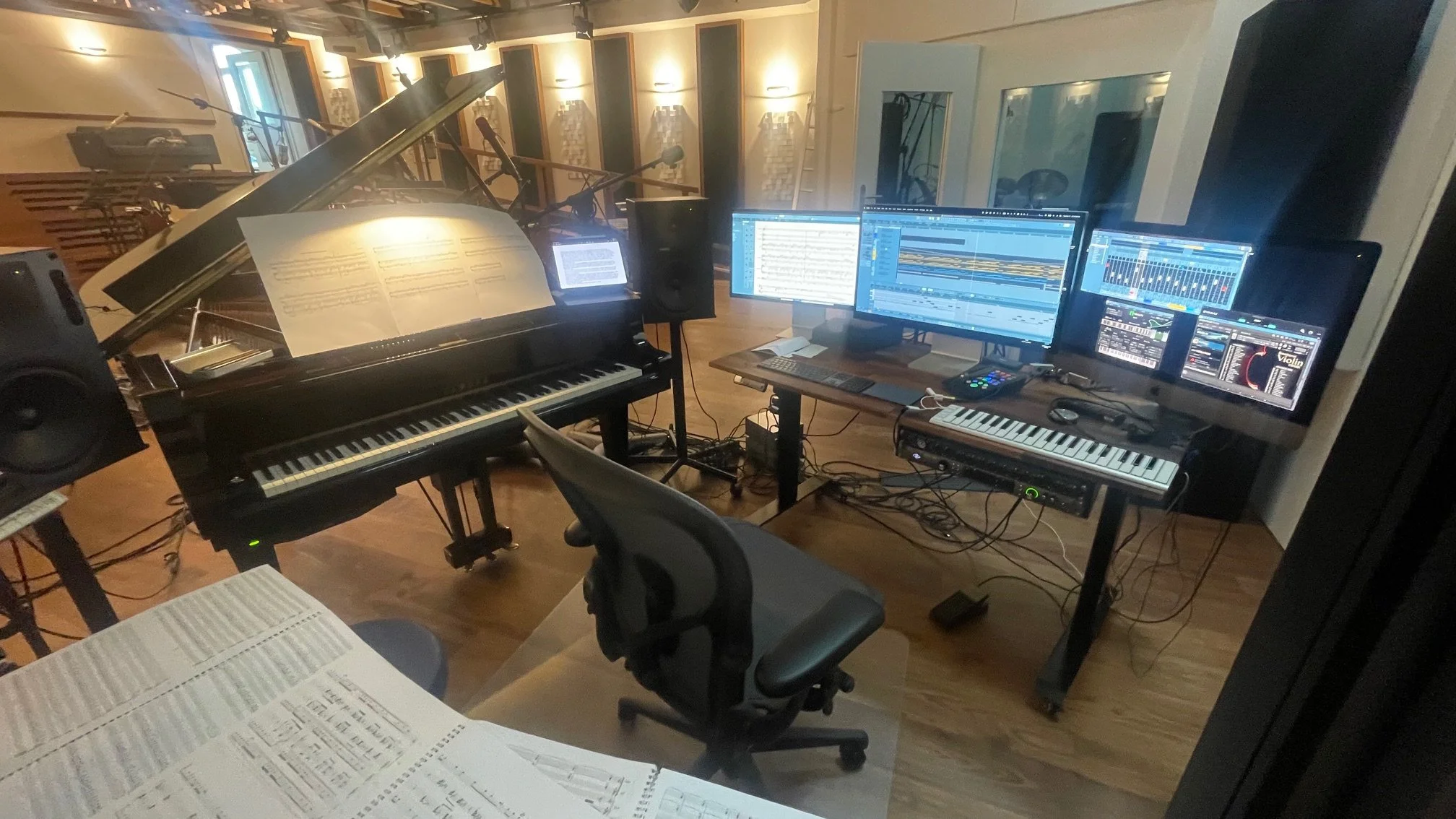
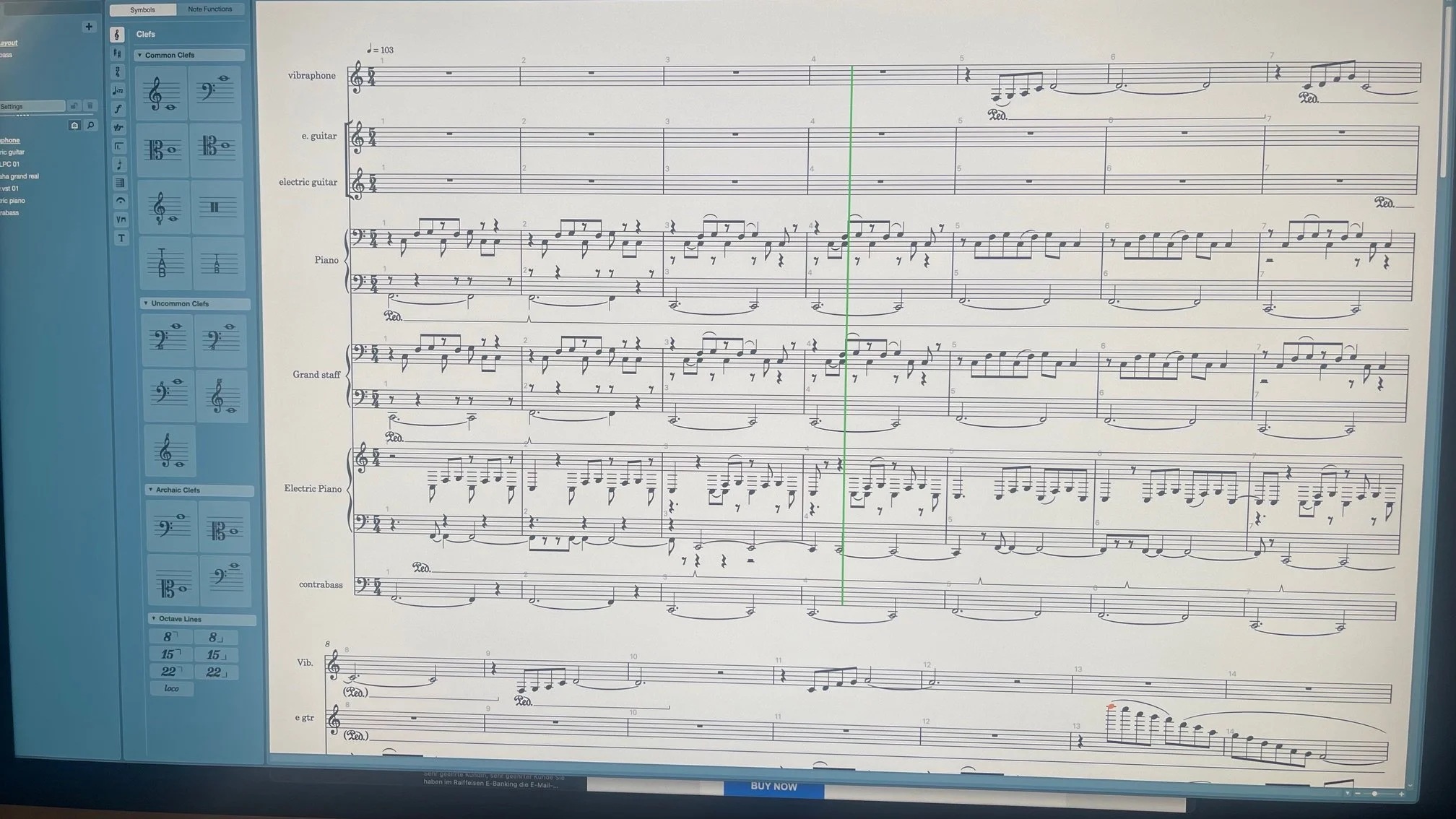
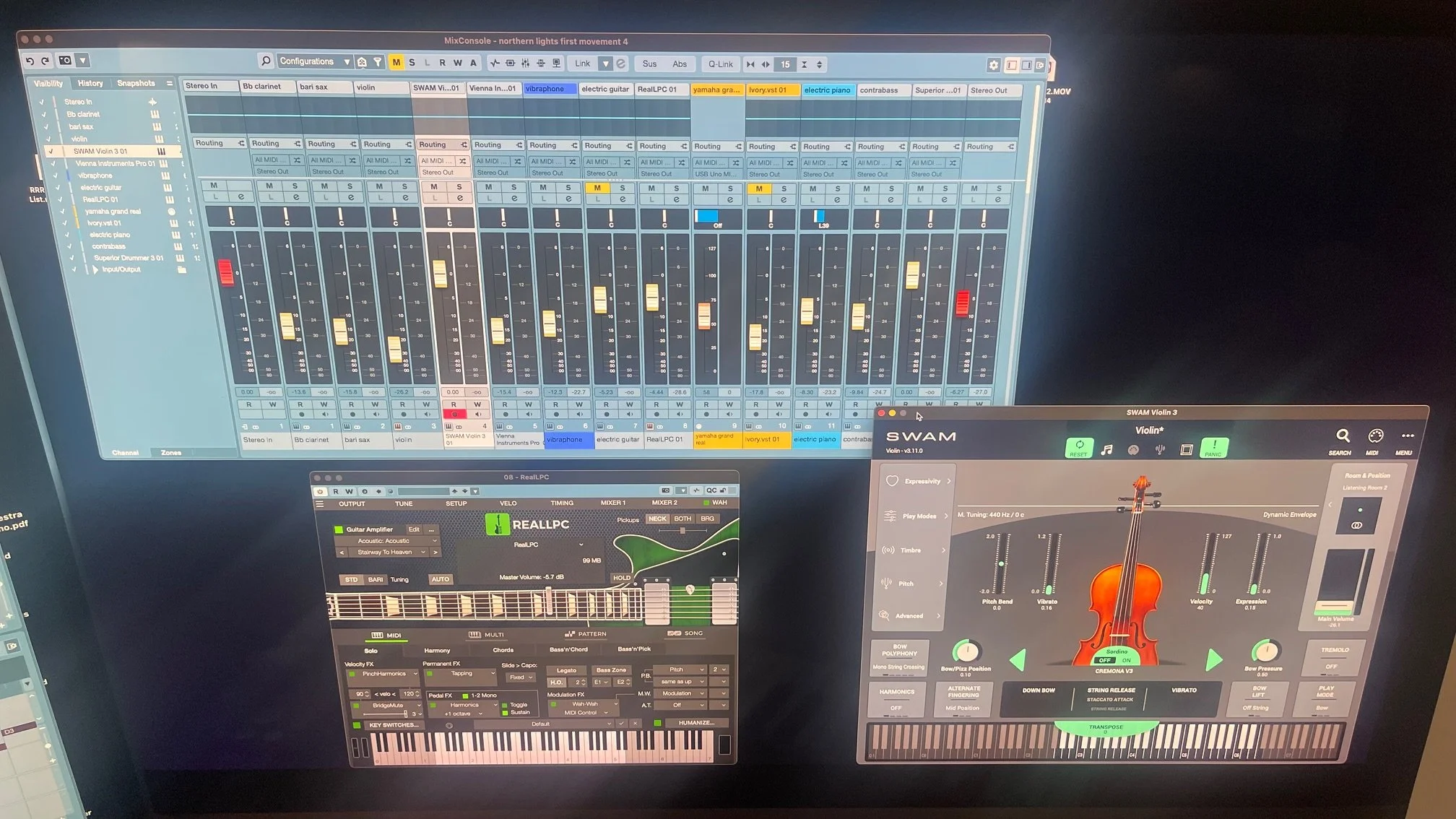
several decades later, i find myself with an exquisite digital player piano (a 7-foot yamaha disklavier) and a three-monitor computer setup with high quality speakers running advanced software (cubase 15). this allows me to instantly see what i play interpreted as piano roll, as well as actual notation. this notation is pretty basic, but i can create entire arrangements of any size and scope using synchronized piano playback (if desired) and a carefully curated array of virtual instruments. lately, i've been gravitating to physical modelling rather than sampling, because this allows me to shape the performance more effectively, and sounds more neutral than samples, in my opinion. it's especially useful for instruments that play sustained sounds, such as woodwinds and strings. but i also like the immediacy of running code rather than loading samples and choosing expressions, at times laboriously. hey, this isn't meant to be the finished product. it's a mockup to check for how everything fits together, conceptual and aesthetic viability, and to serve the performer as a supplement to the notated part.
it must sound really good to my ear, in the extended sense. the ear is the ultimate judge, and i trust it unconditionally. once i am satisfied that we can proceed, it's time to export to my notation program (currently dorico 6) and refine the score, followed by properly transposed and formatted part.
in the next post, i'll talk more about my personal compositional process. that's a tough one! but i'm up for the challenge.